
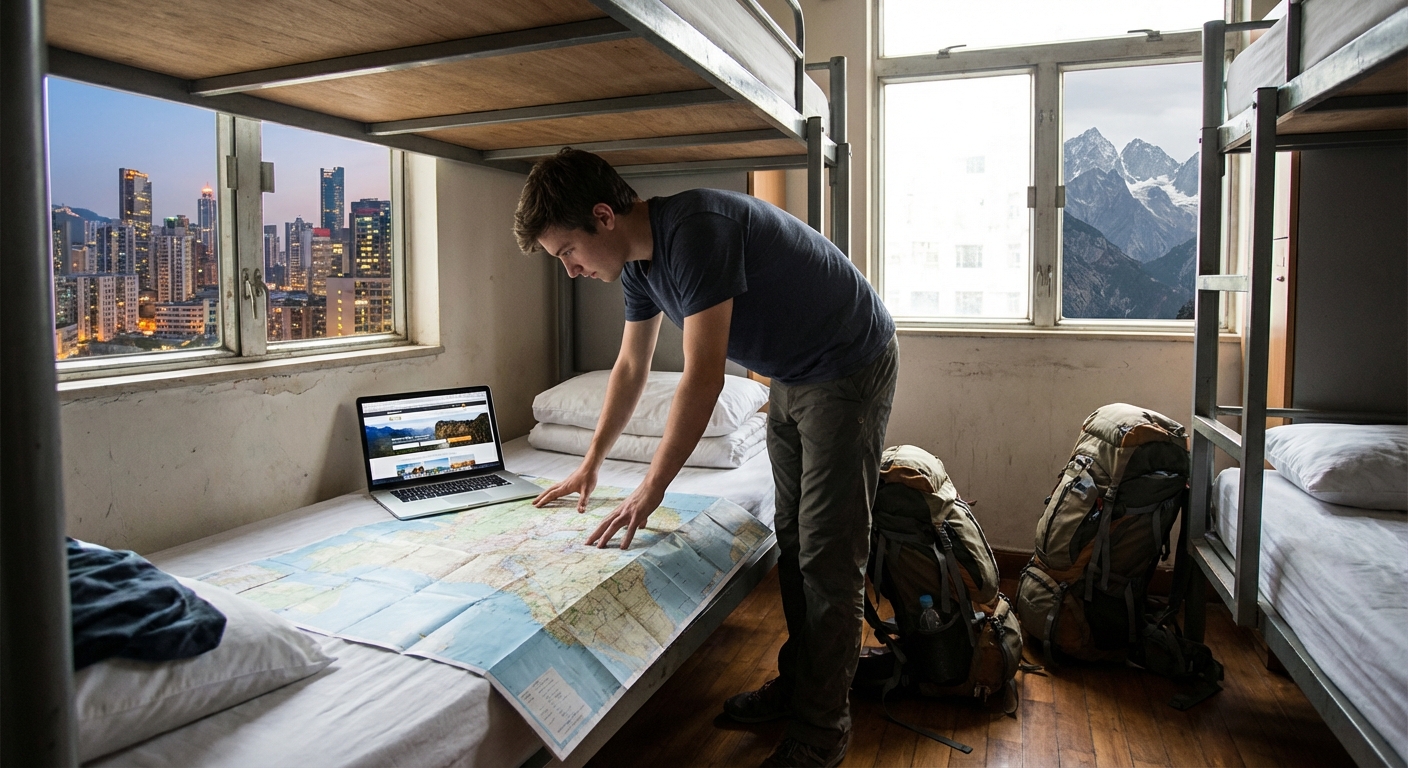
You’ve got the itch to escape: a skyline that’s grown stale, an inbox that never sleeps, a pair of boots begging for dirt. What you don’t have is a huge budget. That’s okay. With a little planning, you can architect an adventure-first trip that hits both mountains and markets without draining your savings.
Build Your Own Budget Adventure—from Scratch
This step-by-step blueprint walks you through planning a budget adventure—from destination choices to packing—so you can go from vague daydream to booked ticket.
Step 1: Choose the Right Adventure Region
The destination determines 80% of your costs. Aim for budget-friendly regions with strong outdoor access.
Great Regions for Budget Adventures
- Andes Trail (Peru, Bolivia, Ecuador): High-altitude trekking, Andean villages, ancient ruins.
- Balkan Loop (Albania, Montenegro, Bosnia & Herzegovina): Rugged mountains, Adriatic coastlines, medieval towns.
- Southeast Asia Circuit (Thailand, Laos, Vietnam): Jungle hikes, caves, waterfalls, cheap street food.
How to decide:
- List 3–5 regions that excite you.
- Check average daily cost and visa rules.
- Prioritize places where you can spend more time outdoors than in pricey cities.
Step 2: Define Your Budget and Adventure Style
Before you fall in love with Instagram photos, get brutally honest about money.
Set Your Total and Daily Budget
- Decide how much you can spend total (excluding existing bills at home).
- Subtract an emergency buffer (10–15%).
- Divide what’s left by the number of travel days.
Example:
- Total savings for trip: $2,000
- Emergency buffer (15%): $300
- Travel fund: $1,700
- 34 days away: $1,700 / 34 ≈ $50 per day
Decide Your Adventure Priorities
Are you:
- A trail hunter who wants multi-day hikes?
- A water wanderer chasing coasts, rivers, and lakes?
- A culture and city explorer who loves markets and historic streets?
You can mix, but choose a primary focus. That focus will shape where your money goes—guides, gear, or transport.
Step 3: Build Your Route Around Anchor Experiences
Instead of a frantic city checklist, plan around anchor adventures.
Identify 3–5 Anchor Experiences
Examples:
- 4-day trek to the Ciudad Perdida (Colombia)
- Hiking the Accursed Mountains (Albania/Montenegro)
- Multi-day motorbike loop in northern Vietnam
- Volcano summit near Arequipa (Peru)
Plot these on a map, then connect them in a logical path using buses or trains.
Add Flexible “Buffer Days”
For every 7–10 days, include at least 1 buffer day for rest, bad weather, or unexpected side trips. This keeps you from blowing the budget on last-minute fixes.
Step 4: Lock In the Big Expenses First
1. Flights or Long-Distance Transport
Book your arrival and departure points early to get the best fares. Consider entering in one country and leaving from another if it follows your route.
2. First 2–3 Nights of Accommodation
Reserve your landing pad in advance so you aren’t stuck paying last-minute premium prices after a long journey.
3. Critical Permits or Must-Do Tours
Some treks, national parks, or climbing experiences require permits or guides booked ahead. Identify these and secure them early so your whole itinerary isn’t derailed.
Step 5: Design a Budget-Friendly Daily Rhythm
Your day-to-day habits will make or break your budget.
A Sample Budget Adventurer’s Day
- Morning: Free hostel breakfast, early hike or self-guided walking tour.
- Midday: Big local lunch at a market or street stall.
- Afternoon: Museum with low or free entry, riverside walk, or beach time.
- Evening: Cook simple dinner in hostel kitchen, journal or plan next day, early sleep.
Limit pricey evenings out to once or twice a week. Swap bar tabs for sunrise views.
Step 6: Pack for Versatility, Not Volume
You want enough gear to handle trails and cities—but not so much that you pay extra fees or dread every bus transfer.
Core Packing List for a Budget Adventure
Backpack & Storage
- 35–45L backpack with hip belt
- Packing cubes or compression sacks
- Lightweight daypack
- 3–4 moisture-wicking T-shirts or tops
- 2 pants (one can zip to shorts, if possible)
- 1 pair lightweight shorts
- 1 base layer (top and leggings) for cold nights
- 5–7 underwear, 3 socks (at least 1 wool)
- 1 fleece or light puffy jacket
- 1 rain jacket
- 1 buff or bandana
- 1 sturdy pair of trail shoes or light boots
- 1 pair sandals or flip-flops
- Headlamp
- Microfiber towel
- Power bank + universal adapter
- Refillable water bottle
- Compact first-aid kit
- Spork, small container, and resealable bags
- Basic toiletries in travel sizes
- Lightweight hammock or travel sheet for hostels
- Trekking poles (collapsible)
- Dry bag for electronics and documents
Clothing (Adjust for Climate)
Footwear
Essentials
Optional Adventure Add-Ons
Travel light enough that you can jog to catch a bus if you have to.
Step 7: Use Insider Tactics to Save on the Ground
Eat Like a Local, Shop Like a Resident
- Buy fruit, bread, and snacks from local markets, not convenience stores.
- Ask hostel staff where they eat lunch.
- If you cook, share ingredients and meals with other travelers.
Move Like a Local
- Learn how to use local buses, trams, and metro lines.
- Download offline maps for walking and hiking.
- For rural areas, ask about shared taxis or minibuses used by residents.
Find Free and Cheap Adventures
- National parks with low entry fees
- City viewpoints you can hike to
- Free walking tours (tip according to your budget)
- Local festivals and open-air events
These usually beat expensive “experiences” curated for tourists.
Step 8: Protect Your Budget With Smart Safety
Stretching money doesn’t mean cutting corners on safety.
- Read recent reviews of transport companies and hostels.
- Keep digital copies of documents and emergency contacts accessible offline.
- Trust your instincts: if a street, bus, or situation feels wrong, change course—even if it costs a bit more.
Your budget is a tool for adventure, not a rulebook you must follow into risky situations.
Step 9: Leave Room for Serendipity
The best budget adventures often come from unplanned detours: a fellow traveler’s tip about a hidden waterfall, an invitation to a village festival, a last-minute decision to summit a nearby peak.
Give your itinerary spacious edges—gaps where you can say yes to the unexpected without derailing your entire plan or budget.
Step 10: Commit and Go
There will never be a perfect time or a perfect amount of money. There will only be your willingness to go now, with what you have, and let the trail shape you.
Pick your region. Set your budget. Choose your anchors. Pack your bag. Then step into the unknown with intention, curiosity, and a plan that protects your wallet without caging your adventure.
Your next summit night is out there—waiting on the other side of a plane ticket and a well-drawn budget map.