
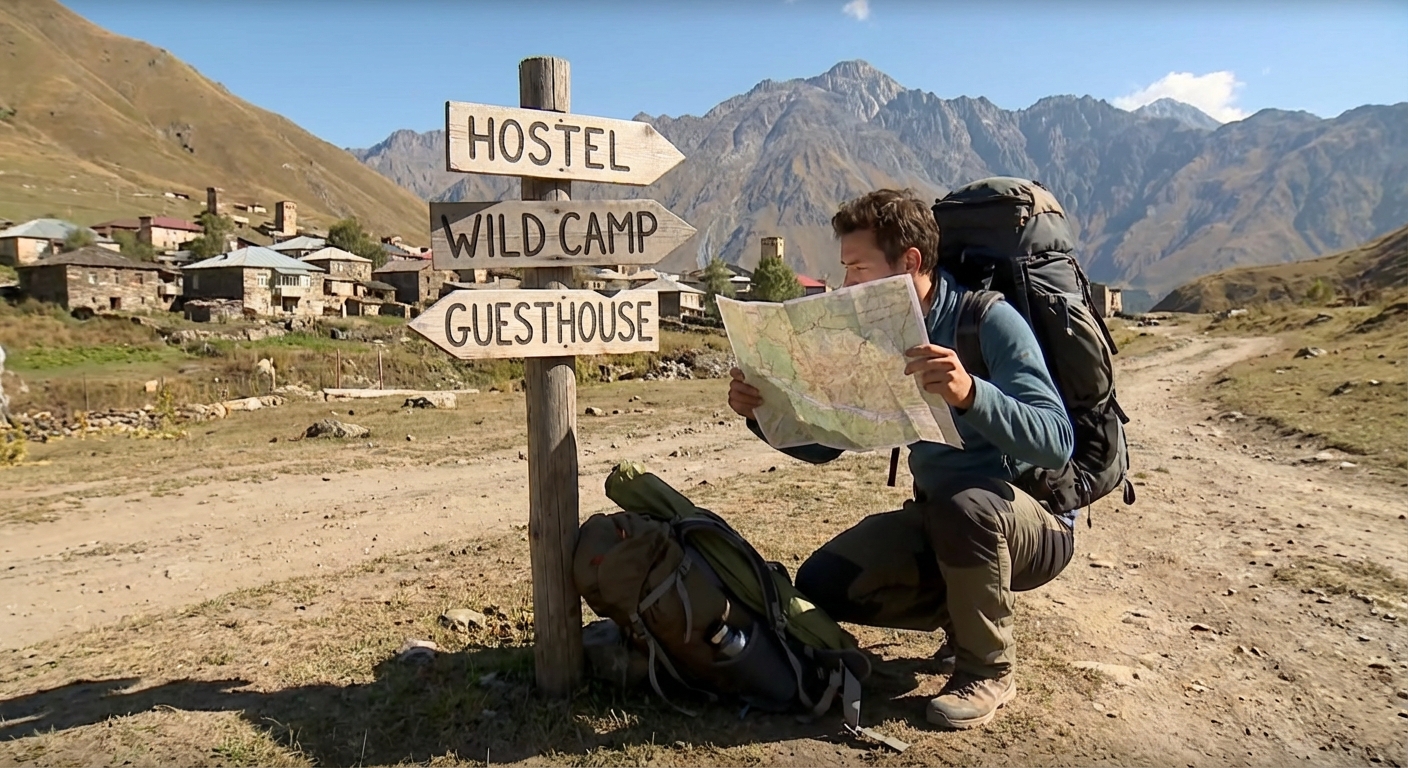
Every night on the road is a choice: four walls and a bunk bed, canvas and starlight, or a simple room in a family home. For budget travelers and outdoor addicts, your bed isn’t just a place to crash—it’s one of your biggest expenses and a major piece of your adventure.
Where You Sleep Shapes Your Entire Trip
This guide compares three classic budget options—hostels, wild camping, and guesthouses—so you can choose the right mix for your style, wallet, and destination.
1. Hostels: Social, Central, and Surprisingly Strategic
What They Are
Hostels are shared accommodations where you rent a bed (often in a dorm) and share common spaces like kitchens and lounges. Some now offer private rooms too.
Why Adventurers Love Them
- Instant community: Meet hiking partners, road-trip buddies, and people to split taxis or guided tours with.
- Local intel: Staff often know lesser-known trails, cheap eats, and bus timetables.
- Facilities: Kitchens, luggage storage, laundry, and common areas are budget-saver gold.
Budget Pros
- Dorm beds can be as low as $5–$15 in many countries.
- Free or cheap breakfast cuts one meal cost per day.
- Shared kitchens allow self-catered meals and trail snack prep.
- Many hostels offer discounted tours or rentals (bikes, surfboards, etc.).
Budget Cons
- Popular city hostels can be overpriced—paying for the scene, not value.
- Add-on costs (lockers, towel rentals, bar tabs) can creep up.
- Party hostels can wreck your sleep before an early trek.
Best Use Case
- First nights in a new country or city
- Hub bases for day hikes and regional exploration
- Solo travelers looking to join others for shared activities
Insider Tip:
Look for smaller, independent hostels a few blocks from the main party zone. They’re often cheaper, calmer, and more focused on actual travel.
2. Wild Camping: Freedom Under the Stars (When and Where It’s Legal)
What It Is
Wild camping means pitching your tent or hammock outside designated campgrounds—often in forests, mountains, or quiet coastal areas.
Why Adventurers Crave It
- Immersion in nature: Wake up with alpine glow or ocean spray, not traffic.
- Ultimate flexibility: Camp where the trail leads, not where the hotels are.
- Night sky therapy: Free stargazing with front-row seats.
Budget Pros
- Often free or extremely cheap.
- Cuts not only bed costs but sometimes transport as you sleep along long-distance trails.
- Enables multi-day adventures without returning to town each night.
Budget Cons
- Requires initial gear investment: tent, sleeping bag, pad, stove (optional).
- Illegal or restricted in many areas—fines can destroy your budget.
- You may still pay for occasional campgrounds or huts for safety, water, or showers.
Safety and Legality
- Research local laws. Some countries (like parts of Scandinavia, Scotland, and certain regions in the Balkans) allow or tolerate wild camping under strict rules. Others prohibit it.
- Practice Leave No Trace: camp late, leave early, stay small and discreet, pack out all trash.
- Avoid sensitive zones: farmland, near homes, private land without permission, protected areas with restrictions.
Best Use Case
- Long-distance trails and multi-day hikes
- Countries with a culture of wild camping rights
- Experienced backpackers comfortable navigating and managing risks
Insider Tip:
Even if you plan to wild camp, budget for paid campgrounds or huts every few nights to shower, recharge devices, and regroup.
3. Guesthouses and Homestays: Local Life on a Budget
What They Are
Guesthouses and homestays are small, often family-run accommodations where you rent a private or shared room. They blur the line between lodging and local home.
Why They’re Fantastic for Budget Travelers
- Cultural immersion: You’re sleeping where locals live, not in an isolated tourist bubble.
- Home-cooked meals: Optional breakfasts or dinners can be hearty and underpriced compared with restaurants.
- Genuine hospitality: Many families offer spontaneous tips, rides, or shared celebrations.
Budget Pros
- Often cheaper than hotels and sometimes comparable to nicer hostels.
- Free tea, snacks, or breakfast are common in some cultures.
- You can split a twin/double room with a travel partner to beat dorm prices.
Budget Cons
- Limited common spaces or kitchens in some places.
- Harder to meet other travelers versus a hostel environment.
- In tourist hotspots, prices can creep up—especially without bargaining or checking multiple options.
Best Use Case
- Rural areas and small towns near trailheads
- When you want a quiet night before a big climb or early bus
- Pairs or small groups who can divide room costs
Insider Tip:
In many countries, you can just show up and ask around for rooms—this can be cheaper than booking platforms, especially outside peak season.
Cost Comparison: A Week of Beds in a Budget Region
Imagine a week in a Balkan mountain and coast loop.
Option A: Hostel-Heavy Itinerary
- 5 nights in city and town hostels @ $14/night = $70
- 2 nights in a hostel near a trailhead @ $16/night = $32
Total: $102 for 7 nights
Option B: Mix of Hostels and Guesthouses
- 3 nights city hostels @ $14/night = $42
- 3 nights village guesthouse @ $18/night (with breakfast) = $54
- 1 night bus (no bed cost, but transport fee instead)
Total: $96 for 7 nights + savings from included breakfasts
Option C: Wild Camping + Occasional Beds
- 3 nights wild camping = $0 (legal, in permitted areas)
- 2 nights official campgrounds @ $8/night = $16
- 2 nights guesthouse/hostel @ $18/night = $36
Total: $52 for 7 nights (+ cost of camping gear spread over entire trip)
Wild camping clearly wins on cost once you’ve already invested in gear.
How to Choose the Right Mix for Your Trip
Ask yourself:
How much comfort do I actually need to enjoy tomorrow’s adventure?
Am I traveling solo or with a partner/group? (splitting private rooms changes the math)
How much am I willing to invest in camping gear up front?
What are the local laws and customs around camping?
Sample Mix for a 3-Week Budget Adventure
- Week 1 (Arrival + Cities): Mostly hostels for orientation and meeting people.
- Week 2 (Trails and Rural Areas): Blend wild camping, campgrounds, and a few guesthouses.
- Week 3 (Coastal and Cultural Wind-Down): Guesthouses and homestays, plus one or two hostel nights for social time.
This mix keeps your budget lean while giving you nature immersion, cultural experiences, and social energy.
Packing Essentials Based on Your Sleep Style
If You’re Hostel-Focused
- Padlock (for lockers)
- Earplugs and eye mask
- Quick-dry towel
- Lightweight sleeping bag liner or travel sheet
If You’re Camping-Focused
- 1.5–2.5 kg tent or hammock with bug net
- Appropriate sleeping bag for climate
- Sleeping pad (foam or inflatable)
- Lightweight stove (optional) and fuel
- Headlamp and extra batteries
If You’re Guesthouse-Focused
- Modest clothing for family settings
- Small gift or token from home (optional but appreciated in deeper homestays)
- Offline translation app for better communication
Final Word: Your Bed Is a Tool, Not the Destination
You’re not crossing oceans and mountain ranges to evaluate mattresses—you’re crossing them for sunrises, ridgelines, markets, and stories.
Use hostels for connection and convenience, wild camping for raw freedom, and guesthouses for cultural immersion. Mix and match them like gear in your pack. The right blend will keep your bank account alive while you chase the adventures that make travel unforgettable.
Your cheapest bed might just be the one that gives you front-row seats to your next wild morning.