
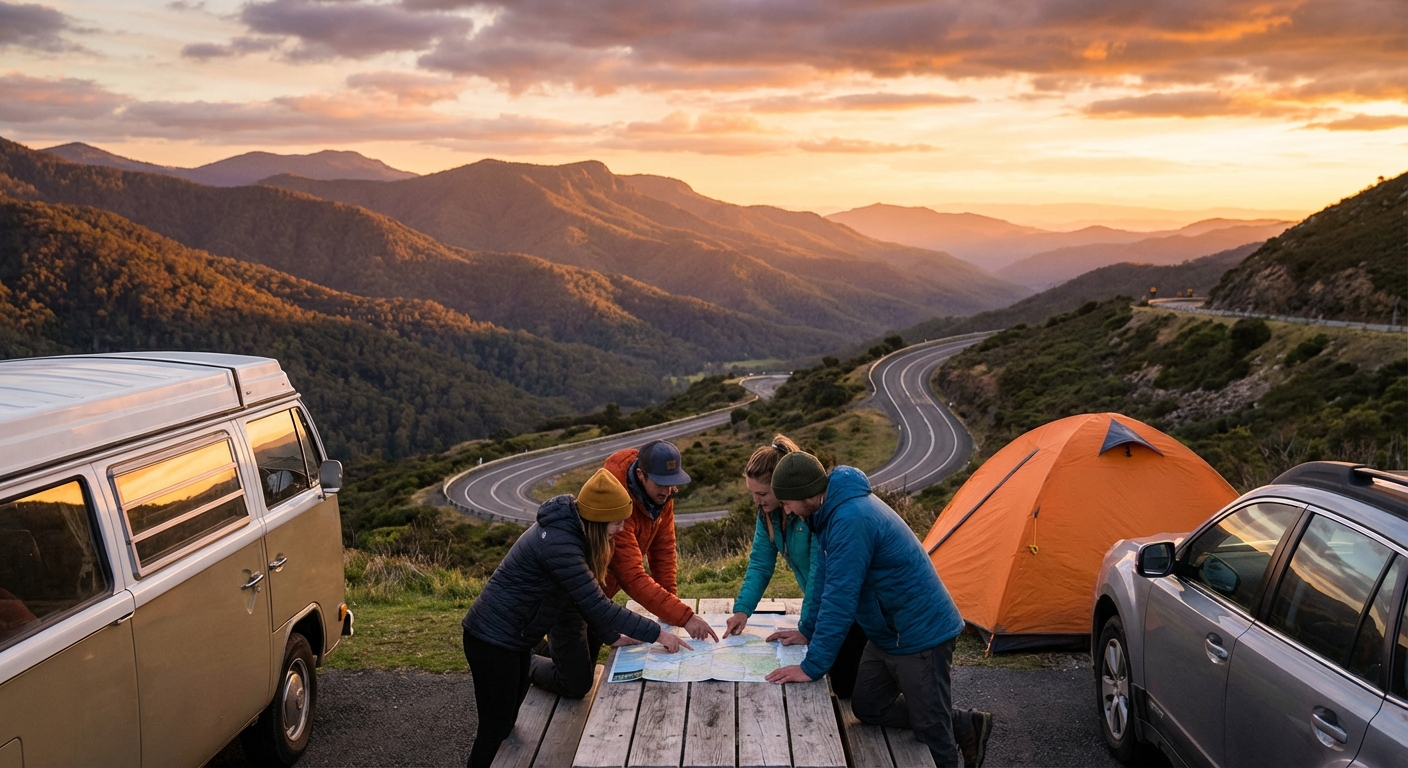
The idea is simple: hit the road, chase views, and wake up somewhere new every morning. The reality? How you travel that road—campervan, car, tent, or motel—shapes everything from your budget to the kind of memories you bring home.
One Dream, Four Very Different Trips
This comparison guide breaks down four core road trip styles so you can pick the combo that matches your adventure level, comfort needs, and wallet.
We’ll cover:
- Destination fit
- Budget implications
- Packing needs
- Insider recommendations
Style 1: Campervan Freedom
The Vibe
Your bed, kitchen, and storage roll with you. A campervan gives road trips a cozy, mobile‑cabin feel—ideal for people who like the outdoors but want a bit of indoor comfort.
Best Destinations
- New Zealand: Classic for self‑contained vans and scenic holiday parks.
- Iceland: Easy ring‑road camping with abundant campgrounds.
- Western USA & Canada: National parks, BLM land, and forest roads.
Budget Snapshot
- Upfront cost: High (rental can be $80–$250/day depending on region/season).
- Savings: Less spent on hotels and restaurants.
- Sweet spot: Longer trips (10+ days) where cooking and camping offset rental costs.
Packing Essentials
Many rentals provide basics, but you’ll still want:
- Soft duffel bags instead of rigid suitcases
- Microfiber towels and personal sleeping bags (if not included)
- Compact camp chairs for outside the van
- Organizational cubes to avoid chaos
Pros
- Incredible flexibility—sleep with a view, change plans freely
- Easy self‑catering
- Cozy shelter in bad weather
Cons
- Higher fuel use and rental deposits
- Tricky in tight city streets and parking garages
- You bring your entire house everywhere—including into crowded towns
Insider recommendation: For popular destinations, book campsites in advance for at least half your nights, then leave the rest for spontaneous free or last‑minute spots.
Style 2: Car + Motels and Guesthouses
The Vibe
Classic road movie energy: long drives, neon signs, late‑night check‑ins, and hot showers. Perfect if you love driving but want a proper bed without messing with tent poles.
Best Destinations
- US & Canada: Route 66 segments, coastal highways, small‑town loops.
- Europe: Cross‑border adventures with cheap guesthouses and pensions.
- South Africa & Namibia (select routes): Good road networks and roadside lodges.
Budget Snapshot
- Car rental: Often cheaper than campervans.
- Accommodation: Variable; big cost factor.
- Savings: Look for midweek deals, loyalty programs, and off‑season rates.
A realistic budget range (excluding flights) can land around $80–$180 per person/day depending on sharing and country.
Packing Essentials
- One small overnight bag for motel use (pajamas, fresh clothes, toiletries)
- Main luggage stays in the trunk
- Slim hanging toiletry kit for tiny bathrooms
Pros
- Comfortable sleep and easy access to showers
- No need to manage batteries, water tanks, or gray water
- Flexible in cities and rural areas
Cons
- Less immersed in nature
- Prices can spike during holidays and events
- Late arrivals might mean limited options
Insider recommendation: Book your first two nights and key hotspots. For the rest, stop by 3–5 pm, scan local booking apps, or walk into smaller inns—often cheaper than big platforms.
Style 3: Car + Tent Camping
The Vibe
Campfires, stars, morning mist on a lake. You’re close to the elements and far from lobby music. Ideal for outdoor‑driven itineraries with hiking, climbing, biking, or paddling.
Best Destinations
- National park loops: Western US, Canadian Rockies, Scandinavia.
- Lake districts and forest regions: Finland, Scotland, Pacific Northwest.
Budget Snapshot
- Car rental: Standard.
- Campsites: Typically far cheaper than hotels; sometimes free on public lands.
- Gear cost: One‑time investment, especially if you camp often.
For frequent travelers, this can be one of the most budget‑friendly ways to see large regions.
Packing Essentials
- Weather‑appropriate tent and groundsheet
- Sleeping bags and sleeping pads or air mattresses
- Camp stove, pot, pan, utensils, lighter, and wash kit
- Cooler and dry‑food box
- Headlamp, lantern, and spare batteries
Pros
- Maximum immersion in landscapes
- Great for early trail access and sunrise missions
- Social—campgrounds are natural conversation hubs
Cons
- Weather vulnerability (rain, wind, heat)
- Setup/pack‑down time each day
- Showers and bathrooms may be basic or shared
Insider recommendation: Aim for two‑night stays at many campsites. It reduces setup fatigue and lets you explore each base area more deeply.
Style 4: Hybrid Hacker: Car + Mix of Motels, Tents, and Cabins
The Vibe
Best of all worlds: camp when it’s beautiful, grab a room when you’re tired or the weather turns nasty. This style suits travelers who want freedom and resilience.
Best Destinations
- Multi‑climate trips: Desert + mountains, coast + interior.
- Long loops: A month through the American West, cross‑continent drives.
Budget Snapshot
- Nightly cost averages out as a blend of cheap and mid‑range.
- You can splurge strategically (e.g., hot springs lodge after a cold, wet streak) while keeping many nights inexpensive.
Packing Essentials
You’ll need a slimmed‑down camping kit plus a motel‑ready overnight bag. Keep camping gear in separate bins so you can leave it untouched on hotel nights.
Pros
- Huge flexibility with weather and mood
- Reduces camping burnout and gear fuss
- Lets you chase last‑minute deals or detours
Cons
- Slightly more complex planning
- Packing list is longer
Insider recommendation: Use a simple rule: “If it’s raining by 4 pm, we motel it.” This protects morale and keeps the trip feeling like an adventure, not a survival exercise.
Choosing Your Style: A Quick Decision Grid
Ask yourself:
How much do I crave comfort?
- High: Car + motels/guesthouses - Medium: Campervan, Hybrid - Low: Car + tent camping
How tight is my budget?
- Very tight: Car + tent, occasional cheap cabins - Moderate: Hybrid style, simple guesthouses - Flexible: Campervan or boutique road lodges
Where am I going?
- Many campgrounds, scenic drives: Campervan or tent combo - Dense cities/towns: Car + motels - Remote regions: Campervan or hybrid with strategic bookings
Who am I traveling with?
- Family with young kids: Campervan or car + cabins/guesthouses - Couple or solo traveler: Any style, but hybrid offers maximum adaptability - Group of friends: Car + mix of rentals, hostels, and campgrounds to suit different budgets
Core Packing List for Any Style
No matter your combo, these are road‑trip gold:
- Navigation: offline maps, phone mount
- Safety: first‑aid kit, jumper cables, spare tire, flashlight
- Comfort: travel pillow, blanket, earplugs, eye mask
- Food: snack stash, reusable cutlery, water bottles
- Personal: toiletries kit, small towel, flip‑flops for shared showers
- Adventure: daypack, hiking/walking shoes, swimsuit, sun protection
Add your style‑specific gear on top.
Turn Your Style Choice into a Real Plan
- Pick your primary travel style (campervan, car + motels, car + tent, or hybrid).
- Choose destinations that naturally support that style (campground density, lodging availability).
- Build a simple budget framework with nightly cost estimates and fuel.
- Draft a packing list centered around your style and climate.
- Book or reserve key nights (popular parks, weekends, festival dates).
Your road trip isn’t just where you go—it’s how you move through those landscapes. Choose the style that excites you and matches your comfort zone, then commit. The rest is endless horizons, changing light, and the steady rhythm of tires on the road.