
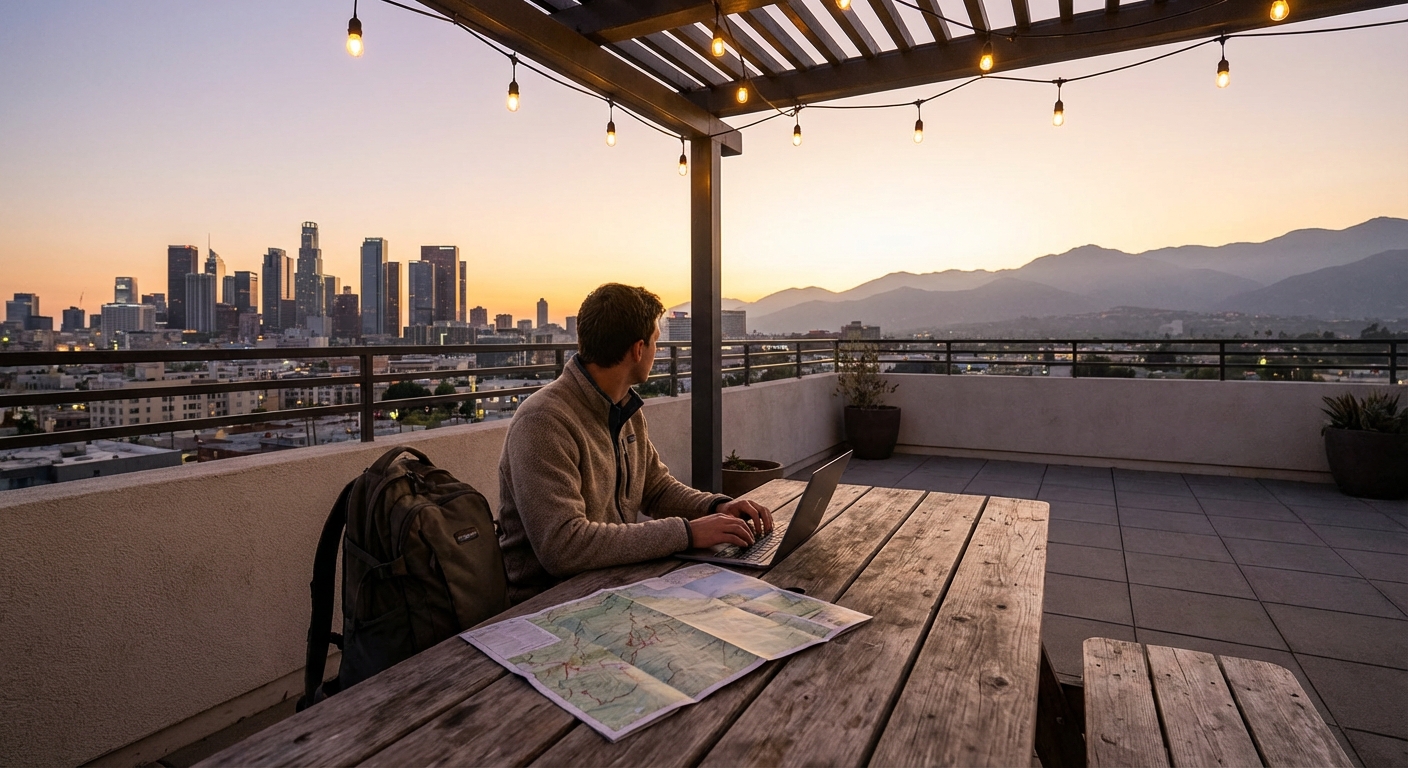
When you’re planning an outdoor-focused trip, the default instinct is to search for famous national parks or remote mountain towns. But the city you fly into can make or break your adventure:
Why Your Choice of City Matters More Than You Think
- It shapes your budget (accommodation, food, transport).
- It determines how easily you can access trails, coasts, and crags.
- It decides how you’ll spend your rest days and rainy afternoons.
Instead of asking, “Where are the best hikes?” start with, “Which city gives me the best gateway to the outdoors I love?” This guide compares different types of cities so you can choose your perfect base.
Four Types of Adventure Cities (And Which One Fits You)
Think of cities as gear. You wouldn’t take heavy mountaineering boots on a beach hike; don’t pick the wrong urban base for your style of exploration.
1. The Mountain-Backed Metropolis
Examples: Denver, Santiago, Innsbruck, Almaty, Cape Town
- Best for: Hikers, trail runners, climbers, skiers.
- Defining trait: A city skyline literally backed by a mountain wall.
Pros:
- Trailheads often reachable by local buses or short drives.
- Outdoor culture is mainstream—easy access to rental gear and guiding.
- Great for multi-day trips that start and end in the city.
Cons:
- Can be pricey during peak outdoor seasons.
- Popular trails near the city get crowded.
Choose this if: You want mornings in mountain air and evenings with urban food, music, and craft beer.
2. The Coastal Playground City
Examples: Lisbon, Barcelona, Sydney, Rio de Janeiro, Vancouver
- Best for: Surfers, kayakers, sailors, coastal hikers, cyclists.
- Defining trait: A city fused with a beach or dramatic coastline.
Pros:
- Easy access to water sports, island day trips, and coastal trails.
- Sunrises or sunsets over the ocean from city viewpoints.
- Often strong bike infrastructure along the waterfront.
Cons:
- Busy high season crowds, especially at beaches.
- Waterfront accommodation can be expensive.
Choose this if: Salt water, sea cliffs, and post-surf espresso are your happy place.
3. The Greenbelt Capital
Examples: Berlin, Portland, Singapore, Oslo, Wellington
- Best for: Runners, cyclists, casual hikers, families.
- Defining trait: A dense network of parks, rivers, and forests woven into the urban fabric.
Pros:
- You can fit micro-adventures into every day: five-kilometer runs, quick forest walks, riverside rides.
- Public transport often links to regional parks.
- Peaceful, nature-rich rest days without long transfers.
Cons:
- Big, dramatic landscapes (high peaks, canyons) may be farther away.
Choose this if: You love staying active every day, but don’t need massive elevation to feel alive.
4. The Cultural Megacity with Wild Weekends
Examples: Tokyo, Mexico City, London, Bangkok, New York City
- Best for: Travelers who want intense culture + big weekend adventures.
- Defining trait: Huge, hyper-energetic cities with wild escapes a train ride away.
Pros:
- City days packed with food, museums, markets, and neighborhoods.
- Weekend missions to mountains, lakes, or coasts.
- Great for travellers combining work trips with outdoor play.
Cons:
- Transit to trailheads can be complex without planning.
- City costs can escalate quickly without a budget strategy.
Choose this if: You want the best of both worlds: neon-lit nights and mountain sunrises.
How to Use City Guides to Compare Outdoor Potential
A typical city guide rarely markets itself as an “adventure base.” You need to read it like a topo map.
Step 1: Scan the Day Trip Section
Key questions:
- How many day hikes or national parks are listed?
- Are there islands, lakes, or mountain villages reachable by public transport?
- Are day trips described as 1-hour, 2-hour, or 4-hour journeys?
Shorter journey times mean more trail for your time.
Step 2: Analyze the Transit Map
Look for:
- Rail or bus lines that run toward contour lines (hills, mountains) or big green patches.
- Commuter lines that end near rivers, reservoirs, or coasts.
The more spokes radiating from the city into wild areas, the better.
Step 3: Check for Outdoor Culture Signals
In the guide or online city overview, note mentions of:
- Running festivals, marathons, cycling events.
- Climbing gyms, outdoor shops, gear rentals.
- Waterfront promenades, long-distance walking paths, or “green corridors.”
These are signs the city understands and supports active travelers.
Budget Considerations: City Cost vs. Outdoor Access
When comparing cities, balance per-day cost with adventure return.
High-Cost, High-Reward Cities
Cities like Zurich, Oslo, or Vancouver may be expensive, but:
- You can access world-class trails by local train or ferry.
- Free outdoor activities can offset museum and restaurant costs.
Lower-Cost Adventure Hubs
Cities like Tbilisi, La Paz, or Chiang Mai offer:
- Affordable food and lodging.
- Easy access to dramatic mountains or jungles.
Budget Tips Regardless of City
- Sleep near transit, not in the most touristed square.
- Use the city as a base for self-guided adventures instead of packaged tours.
- Cook some of your own meals or rely on markets and street food.
What to Pack Based on City Type
Your gear should adapt to both the urban personality and the nearby wilds.
For Mountain-Backed Metropolises
- Layers for altitude swings: base, mid, shell.
- Robust footwear for rocky trails or snow.
- Trekking poles (collapsible) if you’ll handle steep ascents.
For Coastal Playground Cities
- Packable towel and swimwear.
- Reef-safe sunscreen and hat.
- Footwear that tolerates sand, rocks, and wet decks.
For Greenbelt Capitals
- Lightweight trail runners good for park paths and city streets.
- Running belt or small waist pack for city workouts.
- Rain protection if you’re in a temperate climate.
For Cultural Megacities
- Compact daypack for crowded metros.
- Versatile clothes that look city-ready but act trail-ready.
- Noise-cancelling earbuds or earplugs for recovery in busy areas.
Three Example Comparisons to Inspire Your Choice
Lisbon vs. Barcelona (Coastal + Cultural)
- Lisbon:
- Hill workouts built into the city.
- Cascais and Sintra’s coastal hikes via train.
- Generally a bit easier on the budget.
- Barcelona:
- Beaches built into the city layout.
- Montserrat’s jagged peaks by train.
- Bigger, busier, more nightlife.
Choose Lisbon if you want quieter viewpoints and quick coastal day trips. Choose Barcelona if you crave beach-city energy and iconic rock formations.
Denver vs. Innsbruck (Mountain Gateways)
- Denver:
- Gateway to a huge chunk of the Rockies.
- Car rental helps unlock the best trails.
- Innsbruck:
- Mountains rise directly above the old town.
- Many lifts and hikes reachable on foot or by short tram rides.
Choose Denver for road trips and long chains of peaks. Choose Innsbruck if you want alpine access with minimal logistics.
Tokyo vs. Mexico City (Megacity + Wild Weekends)
- Tokyo:
- Hyper-efficient trains to mountains and onsens.
- Meticulous trail systems.
- Mexico City:
- Volcanos, pine forests, and canyons within reach.
- Lower costs, vibrant markets and plazas.
Choose Tokyo if you value precision and infrastructure; choose Mexico City for raw energy, color, and high-altitude drama.
Make Your Next City Work for You
The right city doesn’t just give you a place to sleep—it becomes a launchpad for everything from pre-breakfast runs to multi-day treks.
When planning your next trip:
- Decide your primary outdoor goal (peaks, coasts, forests, or mixed).
- Match it to a city type from this guide.
- Use city guides to map day trips, transit lines, and outdoor culture.
Then commit. Book the ticket. Let the skyline welcome you, and the surrounding wilds challenge you. In the right city, you never have to choose between skyline and summit—you wake up with both within reach.