
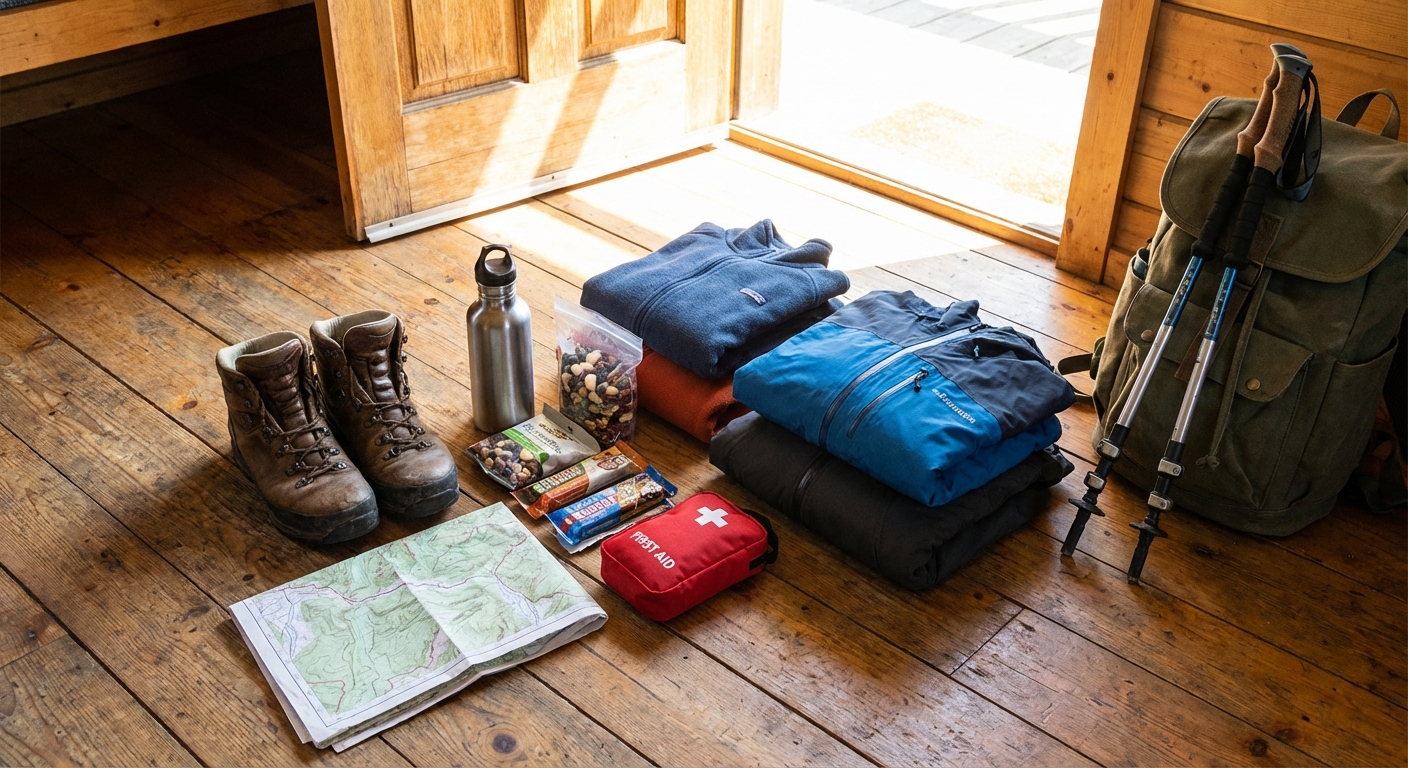
Packing for a hike can feel like a puzzle. Bring too much, and every step punishes you. Bring too little, and you’re shivering in a wet tent, counting hours to sunrise. This guide gives you a flexible packing system that works from day hikes to week-long treks.
Pack Once, Hike Anywhere
Think of this as your trailhead toolkit—customizable, lean, and designed to keep you safe without weighing you down.
Step 1: Define Your Hike in 4 Questions
Before you pull out a single packing cube, answer:
How long are you going? (hours, days, or weeks?)
What’s the coldest and wettest it could reasonably get?
Will you sleep in huts/tea houses, camp, or return to town each night?
How remote is it—can you bail out or resupply easily?
Write your answers down; they’ll dictate everything that follows.
The Core Packing System (Applies to Every Hike)
Whether you’re hiking two hours or ten days, some essentials never change.
1. Navigation & Admin
- Offline map app + downloaded region
- Paper map (laminated or in a zip bag)
- Compass (and basic knowledge of how to use it)
- ID, cash, and/or card in a waterproof pouch
2. Safety & Emergency
- First aid kit (bandages, blister care, pain relief, antiseptic wipes)
- Whistle and small emergency blanket
- Headlamp with spare batteries
- Lighter and waterproof matches
- Multi-tool or small knife
3. Water & Food
- Enough capacity for 2–3 L of water
- Water purification (tablets, filter, or UV pen)
- High-calorie snacks (nuts, bars, dried fruit, chocolate)
4. Weather & Clothing
- Lightweight waterproof jacket
- Warm midlayer (fleece or puffy)
- Sun hat + warm beanie
- Extra pair of socks
This core should live in your pack for every hike.
Day Hike Add‑Ons: Light, Fast, and Prepared
For single-day adventures, your goal is a small, nimble pack.
Day Hike Checklist
- 15–30 L backpack
- Core system (above)
- Water + snacks or a simple lunch
- Phone in a waterproof case
- Light gloves and buff (seasonal)
Insider tip: Pack a compact, ultralight emergency bivy even for day hikes in remote mountains. It weighs little but can save your life in bad weather.
Overnight & Weekend Trips: Sleeping Outside the Comfort Zone
Once you stay out overnight, your pack shifts from “just in case” to “this is my home.”
Shelter & Sleep
- Tent, tarp, or bivy (shared tent splits weight)
- Sleeping bag (temperature-rated for conditions)
- Sleeping pad (insulated if it may freeze)
Kitchen & Food
- Backpacking stove + fuel
- Lighter (plus backup)
- Pot with lid, spoon, small dishcloth
- Simple meals for each night + emergency extra meal
Clothing
Add to your core:
- Base layer top and bottom for sleeping
- One extra pair of underwear
- Lightweight camp shoes (if weight allows)
Packing strategy: Stuff your sleeping bag at the bottom, then heavy items close to your back, and lighter items further out.
Multi‑Day Treks: Dialing in an Expedition Kit
For journeys of 3+ days, you’ll carry a miniaturized version of your life. This is where careful choices matter.
Recommended Pack Size
- Hut / tea house treks: 35–50 L
- Self-supported camping: 50–70 L
Multi‑Day Essentials
- Everything from the overnight list, plus:
- Enough food between resupplies
- Power bank and cables
- Toiletries (toothbrush, small toothpaste, sunscreen, lip balm, a bit of biodegradable soap)
- Microfiber towel
- Trekking poles
Clothing Template (1 week)
- 2 hiking shirts
- 1 long-sleeve base layer
- 1 hiking pant + optional shorts
- 1 warm midlayer
- 1 rain jacket + rain pants
- 3 pairs socks
- 2–3 pairs underwear
- 1 sleep set reserved for dry comfort
Insider tip: Avoid cotton. Once wet, it stays wet and sucks heat from your body.
Weight‑Saving Tricks That Don’t Sacrifice Safety
- Decant liquids into tiny bottles (soap, sunscreen, oil, etc.).
- Use multi-use items: Buff as hat/neck gaiter; pot lid as plate; trekking poles as tent poles (if compatible).
- Share gear if hiking with a partner: one stove, one tent, one first aid kit.
Ask with every item: Does this have more than one use? Can I live without it for a week?
Sample Packing Lists by Destination
Alpine Hut Trek (e.g., Tour du Mont Blanc)
- 40–50 L pack
- Core system
- No tent or stove (huts supply beds and meals)
- Lightweight sleeping bag liner
- Extra T-shirt for evenings
- Cash for huts (many don’t take cards)
Tropical Jungle Trek (e.g., Amazon or Southeast Asia)
- 35–50 L pack
- Core system
- Mosquito repellent and head net
- Lightweight long sleeves and pants for insect protection
- Quick-dry socks and shoes
- Extra dry bags for electronics
High Altitude Route (e.g., Andes, Himalaya)
- 50–65 L pack (if camping) or 40–50 L (tea houses)
- Warmer sleeping bag and insulated pad
- Down or synthetic puffy jacket
- Buff + heavier gloves
- Sunglasses with strong UV protection
Budget Tips While Building Your Kit
- Start with renting big items (tent, bag, pad) for your first trip. Buy later if you fall in love with it.
- Thrift or outlet-shop midlayers and base layers.
- Prioritize good footwear and rain gear; everything else can be upgraded slowly.
Create a simple gear spreadsheet with columns for need, have, and borrow/rent so you don’t double-buy.
Pre‑Trip Packing Checklist (The Final 24 Hours)
Before you zip your pack for good, run through this:
Passport, ID, permits, and insurance details
Phone with offline maps downloaded
Power bank charged
Test-packed backpack at trail weight—walk around the block
Emergency contacts and itinerary shared with someone at home
If you can do a short shakedown hike with your fully packed bag, even better. Adjust straps, trim what you don’t need, and dial in comfort before you hit the real trail.
Step Onto the Trail with Confidence
Packing doesn’t have to be a source of stress. With a repeatable system and a few thoughtful choices, your backpack becomes your ally, not your enemy.
Pick your next hike, tailor the lists above, and pack only what you truly need. The lighter, smarter, and more prepared you feel at the trailhead, the easier it is to forget about your gear and focus on what you came for: the crunch of dirt under your boots, the rush of ridgelines, and the wild freedom of moving through big landscapes under your own power.